


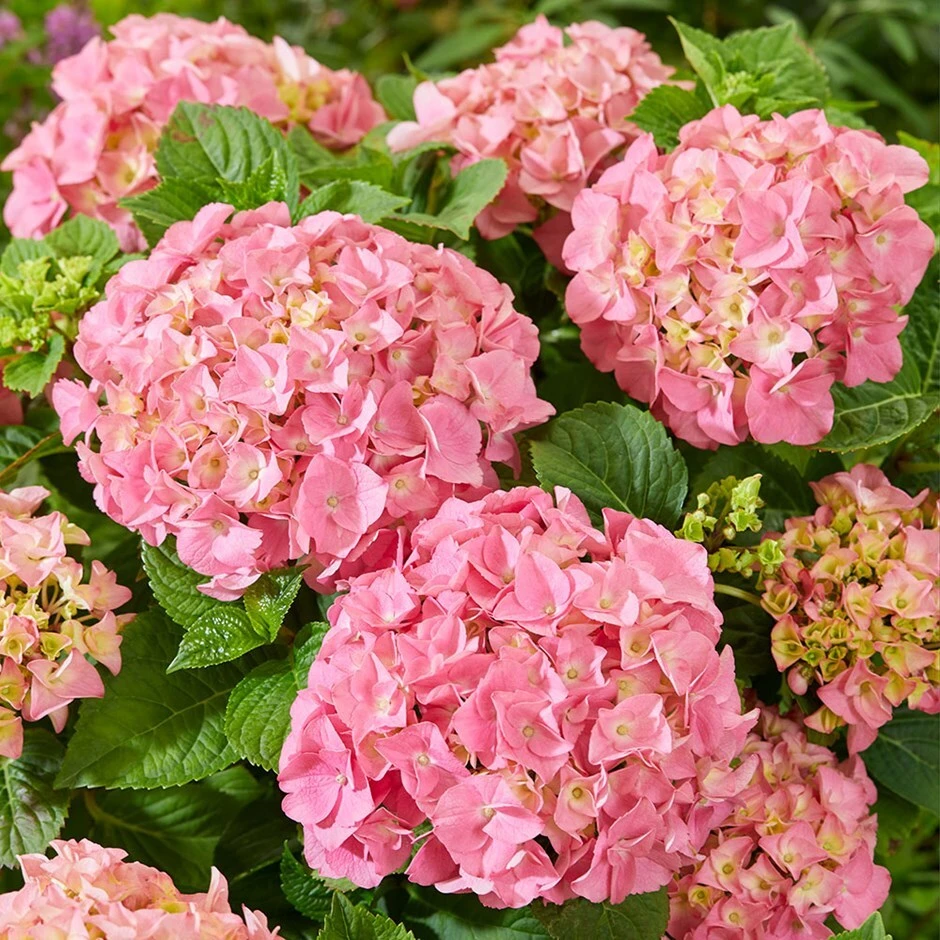
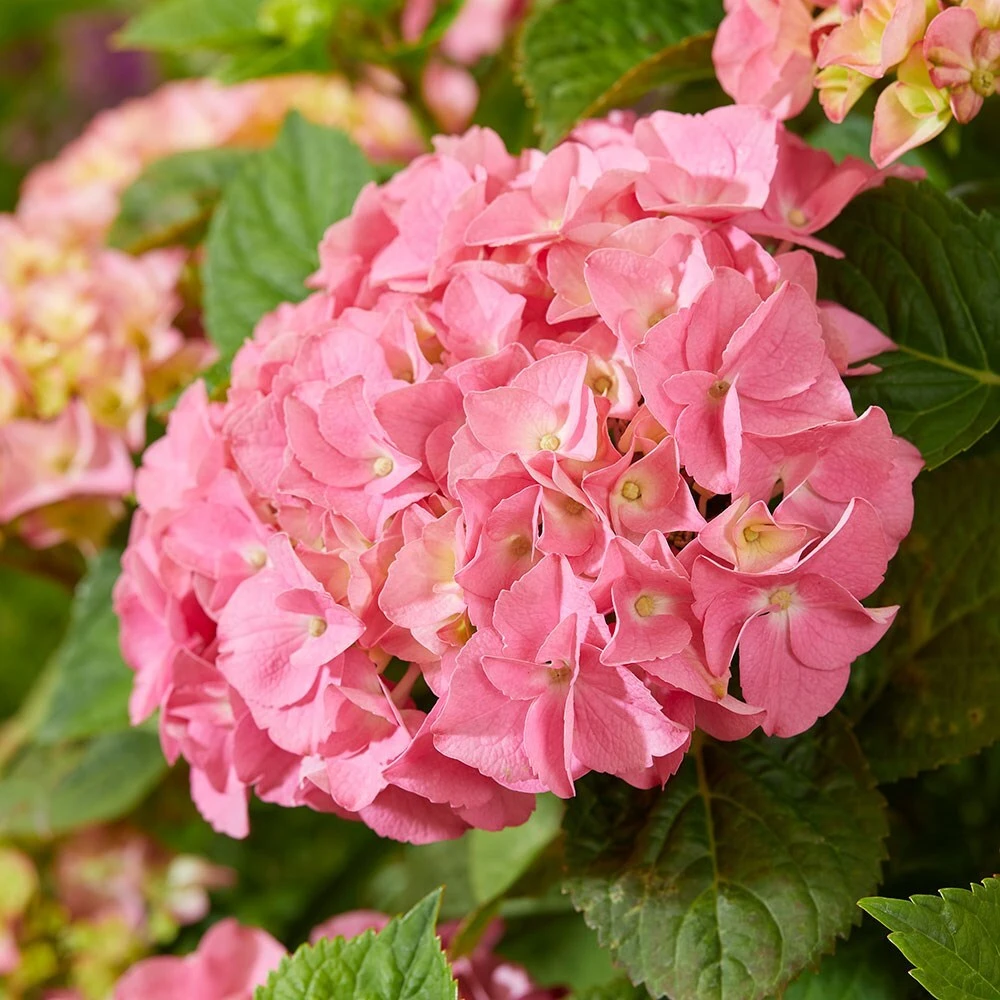
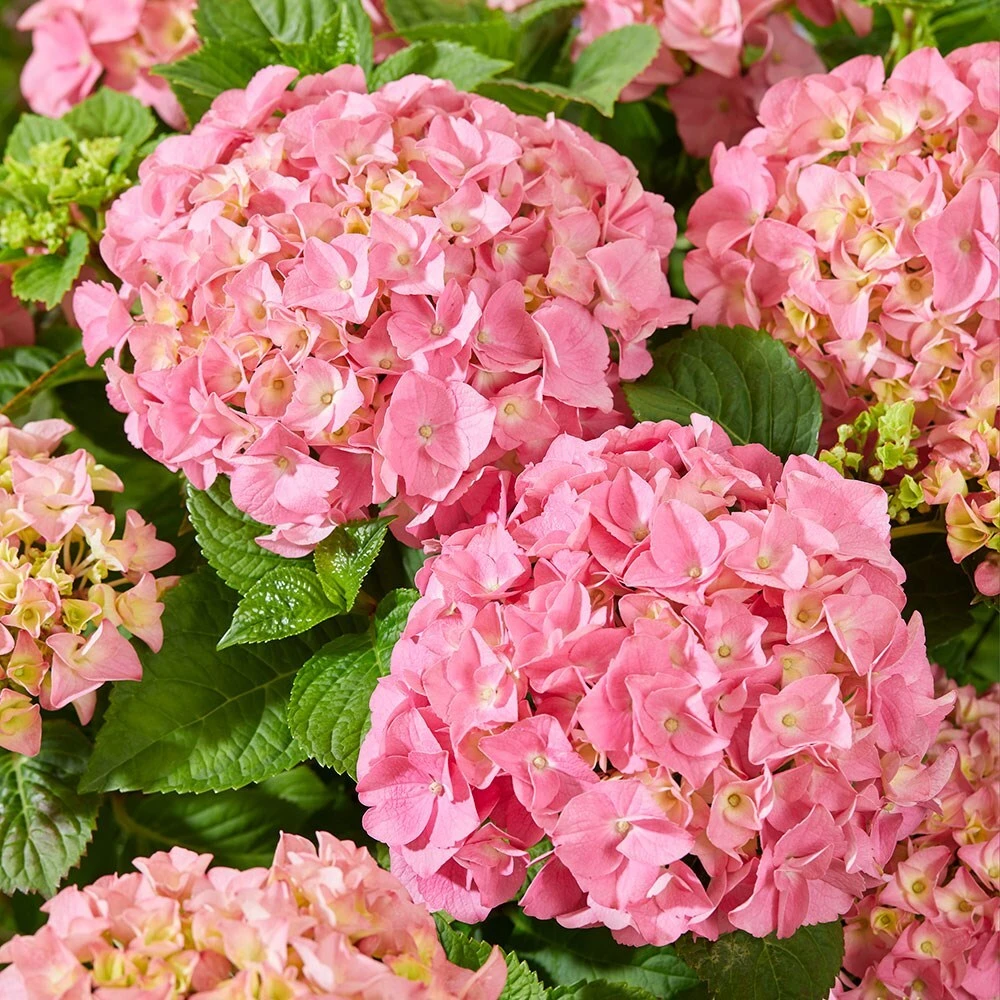
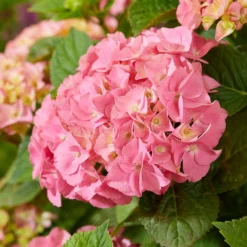

Hydrangea Macrophylla ‘Pink’
Original price was: £19.99.£13.99Current price is: £13.99.
- Experience the Best Quality
- Nature-friendly materials, for a better planet.
- Effortless solutions, excellent customer care.
- Quality Meets Affordability

- Position: full sun or partial shade
- Soil: moist, well-drained, moderately fertile, humus-rich soil
- Rate of growth: average
- Flowering period: June to September
- Hardiness: fully hardy
Grown as an individual specimen in a pot or border, or planted as a lovely big swathe along a valley floor…whatever you choose for your Hydrangea macrophylla ‘Pink’, it will be sure to make a big impact. Lime green emergent flower buds quickly age from slightly pink to really pink and are a perfect match for the bright green, slightly toothed foliage.
Hydrangeas give their best pink flowers when grown in soil with a neutral to alkaline pH. Therefore, if you want to make sure that your hydrangeas flowers stay pink (and don’t turn mauve or blue), you will need to make sure that the soils pH does not slip below 6. The easiest way to do this (if necessary) is to apply an annual sprinkling of lime. - Garden care: Improve the soil prior to planting by adding plenty of well-rotted manure or garden compost, adding mycorrhizal fungi (Root grow) to aid establishment. Hydrangeas do not like to dry out so keep them well watered during hot, dry weather. If they do start to suffer, soak the roots with a hose and they will usually recover. Remove faded flowerheads in spring after the danger of frosts, cutting back the flowered stems to a strong pair of buds. Take out misplaced or diseased shoots. Mulch young plants with well-rotted manure or compost in spring. Once established, remove a quarter to a third of the shoots to the base of the plant.
- Humans: Skin allergen; Pets: Harmful if eaten
| Option | 2 litre pot |
|---|
Be the first to review “Hydrangea Macrophylla ‘Pink’”
Related products
Climbers
Climbers

Clematis

Climbers

Climbers
Clematis
Clematis
Reviews
There are no reviews yet.