Sale!
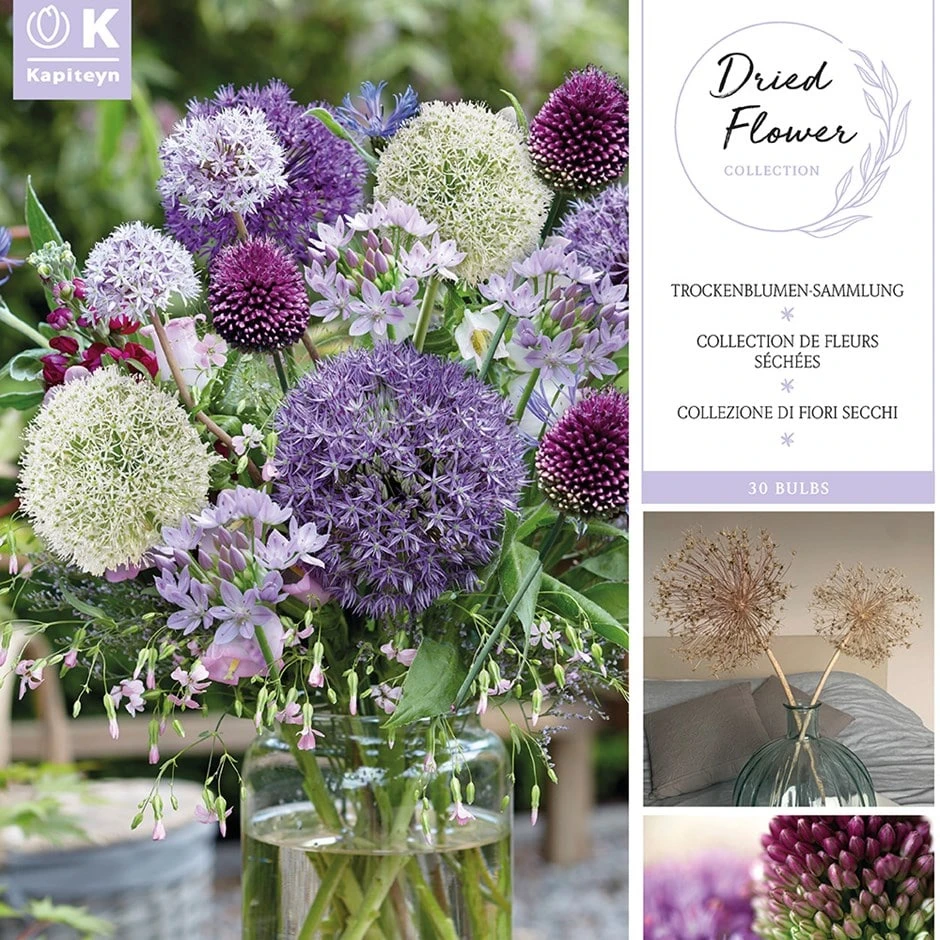
Dried Flowers – Spring ‘flowering Bulb Collection’
Original price was: £12.99.£9.09Current price is: £9.09.
- Experience the Best Quality
- Nature-friendly materials, for a better planet.
- Effortless solutions, excellent customer care.
- Quality Meets Affordability

- Position: Full sun
- Soil: Fertile, well-drained soil
- Flowering period: May to June
- Hardiness: Fully hardy
Highly prized for their spectacular flowerheads, these popular bulbous perennials are a delightful addition to late spring and early summer borders, offering colour and structure. Beyond their ornamental value, these alliums attract beneficial insects like bees, and are valuable for both fresh and dried arrangements. These plants originate from dry, mountainous regions, them easy to grow in sunny spots with well-drained, reasonably fertile soil.
In each collection you will receive the following:
- 1 × Allium ‘Gladiator’: This allium forms generous clumps of mid-green leaves, which start to die back before the sturdy, upright stems emerge in early summer, bearing large rounded flower heads. The lavender-purple flowers of ‘Gladiator’ blend well with most shades of pink, as well as stronger purples and plums. Grows to 1.5m.
- 2 × Allium ‘Mount Everest’: Tightly packed spherical umbels of 50 or more white, star-shaped flowers appear on upright, ribbed stems in early summer, above the strap-shaped foliage, starts to die back before the flowers emerge. ‘Mount Everest’ is a tall allium with an outstanding architectural form that is ideally suited to gravel gardens. Grows to 1.2m.
- 5 × Allium ‘Purple Sensation’: Densely packed umbels of deep violet, star-shaped flowers appear in early above strap-shaped grey-green leaves. Grows to 1m.
- 10 × Allium sphaerocephalon: A gorgeous allium with small, egg-shaped flowerheads, that top tall, slender stems in mid- to late summer. Planted en-masse in a border, these diminutive claret-coloured flowers look great emerging from a screen of foliage, or against a backdrop of then the flowers gently fade as summer comes to a close. Grows to 90cm.
- 12 × Allium roseum: A very pretty ornamental onion with open clusters of pale to rich pink flowers above strap-shaped foliage. Grows to 60cm.
Plant bulbs in a sunny spot with freely draining soil from August to November. Avoid excessive mositure from late summer when they become dormant. Over-large clumps can be lifted and divided in autumn or spring.
- Humans/Pets: Ornamental bulbs – not to be eaten
| Option | 1 × collection, 30 bulbs |
|---|
Be the first to review “Dried Flowers – Spring ‘flowering Bulb Collection’”
Related products
Sale!
Original price was: £24.99.£17.49Current price is: £17.49.
Sale!
Climbers
Original price was: £27.99.£19.59Current price is: £19.59.
Sale!

Climbers
Original price was: £27.99.£19.59Current price is: £19.59.
Sale!
Original price was: £27.99.£19.59Current price is: £19.59.
Sale!

Clematis
Original price was: £36.99.£25.89Current price is: £25.89.
Sale!
Climbers
Original price was: £24.99.£17.49Current price is: £17.49.
Sale!
Clematis
Original price was: £24.99.£17.49Current price is: £17.49.
Sale!
Clematis
Original price was: £37.99.£26.59Current price is: £26.59.
Reviews
There are no reviews yet.